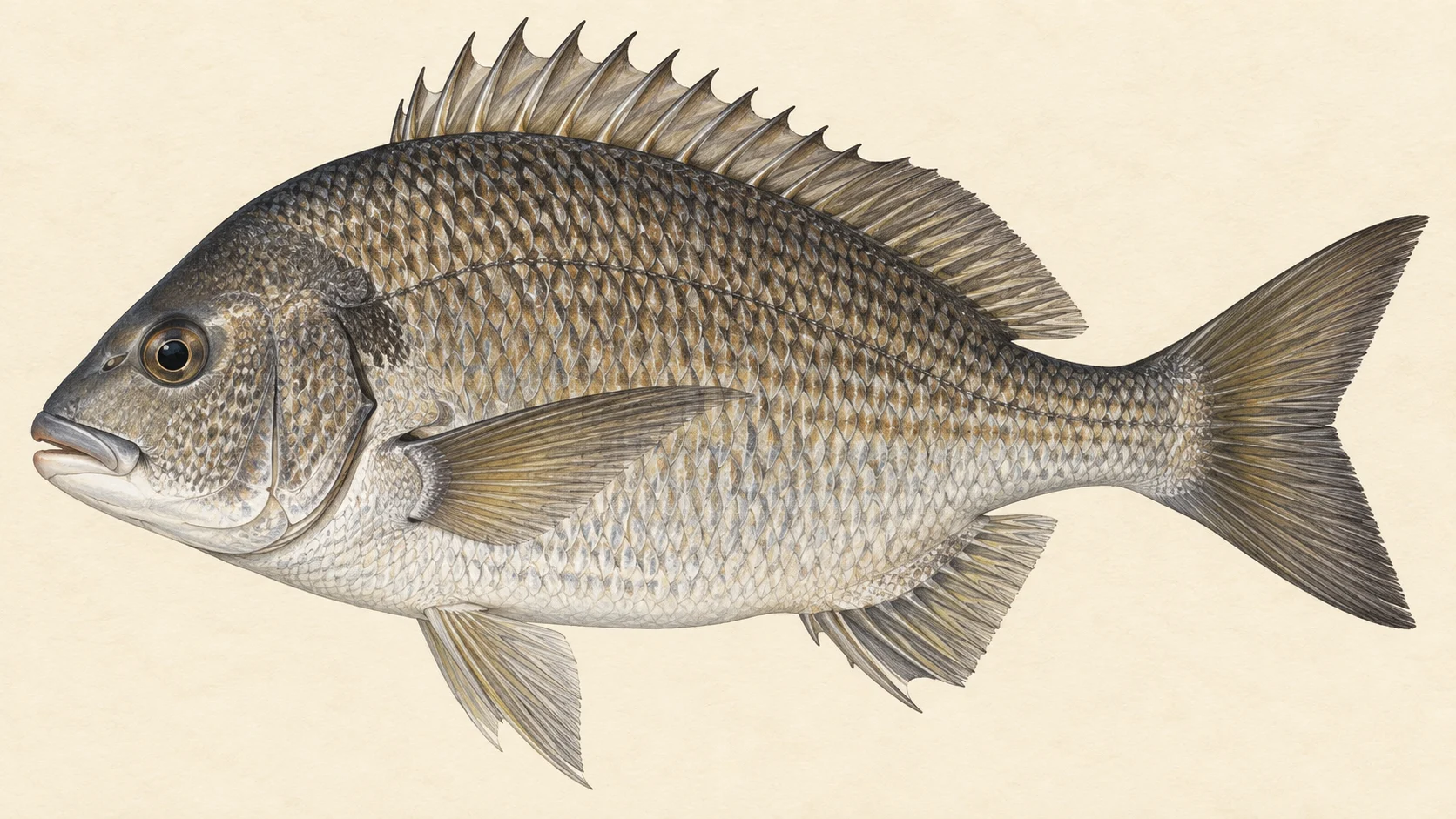
Conjola Lake is a lake in New South Wales that the state fisheries department's Go Fishing guide lists for estuary fish, and the reason to bring a fly rod is the chance of flathead or bream on a small fly in shallow water.
Treat it as two waters for planning. There are the edges you can reach on foot, where shallow water meets the bank, and there is the open lake, which you reach from a boat or kayak put in at one of the Maritime NSW ramps the access card names. Study a map before you go and pick one stretch of edge to fish properly rather than sampling several.
The easiest trip, and the one to start with, is on foot along the shallows on a calm morning. The fish recorded in survey samples are mostly small: goldspot and pinkeye mullet, smallmouth hardyheads and smooth toadfish. That tells you the bait is there. The flathead and bream come from the Go Fishing guide's list, not the survey, and in our view a small baitfish fly worked slowly over sand and weed is how you find out what is hunting that bait. No water-specific rule was found, so the consequence is simple: read the current NSW fishing guide for the licence and each species' bag and size limits before your first cast, not after.
The second trip is a small boat or kayak from one of the ramps. It opens up edges and snags you cannot walk to. Keep to sheltered water and come back in if the wind gets up.
Do not come expecting a big-fish lake. Come for a quiet morning on the flats with a light rod and a box of small flies, and let the bait show you where to cast.
Rig a six weight with a floating or intermediate line, tie on a sparse size 6 baitfish fly, and start walking the first calm edge you find.
Water and habitat
The fish list the NSW fisheries guide gives for the lake is an estuary list. In our experience that decides where fish sit on water like this. Small bait gathers over weed and in the shallows. Flathead lie on sand beside that weed, waiting for bait to cross. Bream and luderick work the edges and anything solid in the water.
So the line where weed gives way to sand is the one to walk first, and any fallen timber or rocky edge you find is the one to cast at from a boat.
Fish and forage
The fish recorded in the lake's survey samples are small ones. Goldspot mullet and pinkeye mullet both turn up, along with smallmouth hardyheads and smooth toadfish. The survey chart shows how much sampling lies behind that list.
The NSW fisheries Go Fishing guide describes a wider cast: dusky flathead, bream, whiting, estuary perch, luderick, mullet and other estuary species. Treat that as the guide's account of what may be there, not a record of what has been caught. In our view the flathead and bream are the ones worth the drive.
For the fly box, the recorded fish are a menu of bait. Hardyheads are small and bright, and young mullet a little stockier. A sparse white or olive-over-white baitfish fly in sizes 6 to 8 matches both, and a small weighted shrimp or clouser-style fly bounced along the sand is a good bet for flathead and whiting. Luderick eat weed and are a specialist target on fly; leave them for a later trip.
Smooth toadfish will pick at a slow fly and can bite through light tippet, so carry spares.
When to fish it
No fixed calendar sets the fishing here, so this is a guide's read. Small bait is on the edges in any month, and a calm, clear morning matters more than the date. Wind puts a chop on the shallows and hides the fish, so go early before a sea breeze gets up.
The warmer months are, in our experience, when estuary flathead and bream are most willing to chase a fly in shallow water. In the cooler months slow down, fish a little deeper, and give the fly more time near the bottom.
How to fish it
A six weight suits the lake in our view, with a floating line for the shallowest edges and an intermediate for a boat drift. Fish a leader of about ten to twelve feet with a light fluorocarbon tippet.
On foot, walk slowly with the sun behind you and cast along the edge rather than straight out, so the fly spends its whole retrieve where fish hunt. For flathead, let a weighted fly touch the sand and hop it back in short pulls with long pauses; the take often comes as the fly settles. For bream, a slower, steadier strip near weed and structure is a good bet. If nothing follows after a few dozen casts, move along and try again.
From a boat or kayak, drift the edges and cast in toward snags and weed. The streamer fishing page covers the retrieves and line control.
Access and safety
The access card names the Maritime NSW boat ramps on the lake. That is where the ramps are, not a statement about parking, fees or who may use them; follow the signs at each ramp.
On foot, treat any private land, jetty or fenced area as closed unless a sign says otherwise.
As on any open water, wear a lifejacket in a boat or kayak, keep an eye on the wind, and turn back while it is still easy. When wading, shuffle your feet on soft bottoms and watch where you put your hands. Flathead carry sharp spines, so carry a lip grip and handle them with care.
Regulations
No water-specific rule was found for Conjola Lake. Check the current NSW Department of Primary Industries and Regional Development recreational fishing guide for the licence and the bag and size limits for each species before you fish.