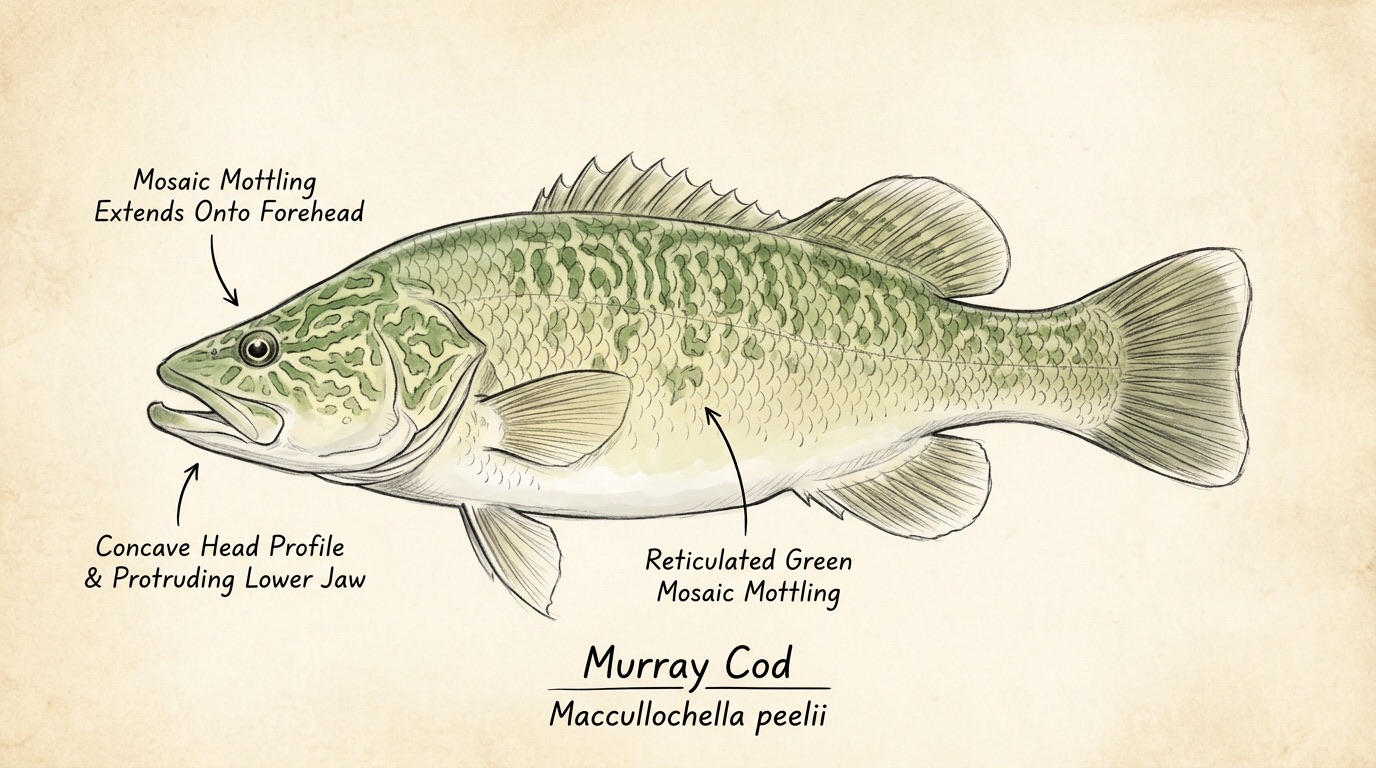
Canberra is the only capital city in the country where you can catch a Murray cod on a fly before work and be at your desk by nine. The reason is that the territory has two cod fisheries that could not be less alike, and neither is a substitute for the other.
The first is the sure thing. Lake Burley Griffin is six hundred and forty-six hectares of engineered urban lake in the middle of the city, stocked with Murray cod in most years since 1980, nearly four hundred thousand fish in all with the last release in 2025. The survey record confirms cod caught there in both the 2010s and the 2020s, which is the useful signal that the fish survive and are found. Fish it at first and last light against the rock walls, bridge pylons and drop-offs, before the rowers take the middle of the day.
The second is the wild one. The Murrumbidgee River carries an unstocked population in the gorges and long pools of its run through the territory, part of the same Murray-Darling fishery the species is named for. Basin monitoring has measured more than a thousand cod there since 2015, with the length record running to the sixty-five-centimetre class and beyond. On the river everything is timber, and the fly has to land against the snag, not near it.
Both want the same gear and the same care: a nine or ten weight, big flies, a strip-strike, a barbless hook, and a Vulnerable-listed fish kept in the water while you unhook it. Warm water from November to April is when the fish move, and cod carry a closed season across the basin jurisdictions that covers the spawning run. This guide holds no captured ACT rule, so check the current ACT dates before you fish, and do not assume a NSW limit applies on the Canberra side of a border the river crosses repeatedly.
The fishery here
Two very different Murray cod fisheries share the ACT. Lake Burley Griffin is a six-hundred-and-forty-six-hectare put-and-take urban lake, stocked with Murray cod in most years since 1980 and confirmed holding them in the 2010s and 2020s surveys; the stocking timeline and the lake's remarkably steady level are drawn on its page. The Murrumbidgee River carries a wild, unstocked population instead, part of the same Murray-Darling fishery the species is named for, with a length record from basin monitoring drawn on its page.
Fish the lake for a sure thing, fish the river for a wilder version of the same species. Neither one is a substitute for the other.
Where to start
On the lake, work the hard edges: rock walls, bridge pylons and any sharp drop-off close to deep water, at first and last light before the rowers and the swimmers take the middle of the day. Put the fly tight against the structure, let it sink, and retrieve with long pauses; the take usually comes when the fly is doing nothing. On the river, everything is timber. The fly has to land against the snag, not near it, and a cast a metre off a log is a wasted cast. One local guide's best sessions have come from casting surface flies as far back into the snags as possible; if you think you have missed the spot, you probably have. Beyond that, fish it the way you would anywhere: the national Murray cod page has the full rundown on rods, lines and flies, and the strip-strike that lands them.
Local tackle and flies
A nine or ten weight and a leader you can pull a fish away from concrete or a red gum with. A floating line with a punchy head for the shallow timber and the lake walls; an intermediate or a sink tip for the deeper outside bends of the river. Big-profile subsurface flies and foam-head poppers on top, barbless, because release matters on a Vulnerable-listed fish.
Timing
Nothing about the season is known to shift locally. The national page's spawning windows and water-temperature thresholds are the best guide you have: the run is on once the water pushes past fifteen degrees and keeps climbing, and the best of it comes as the river holds nineteen to twenty. Warm water from November to April is when the fish move in both waters, and first light, last light and warm overcast days are worth more than a bright noon. Murray cod carry a closed season across the Murray-Darling jurisdictions, and it covers the spawning run; check the current ACT dates before you fish for them.
Rules
The ACT sets its own recreational fishing rules, including licensing, seasons, size and bag limits, and this guide holds no captured ACT rule for Murray cod, so no limit or season is stated here. Check the current ACT fishing rules before you fish for or keep one, and do not assume a NSW limit applies on the Canberra side of the border. The river crosses that border repeatedly, and which rules apply depends on exactly where you are standing.