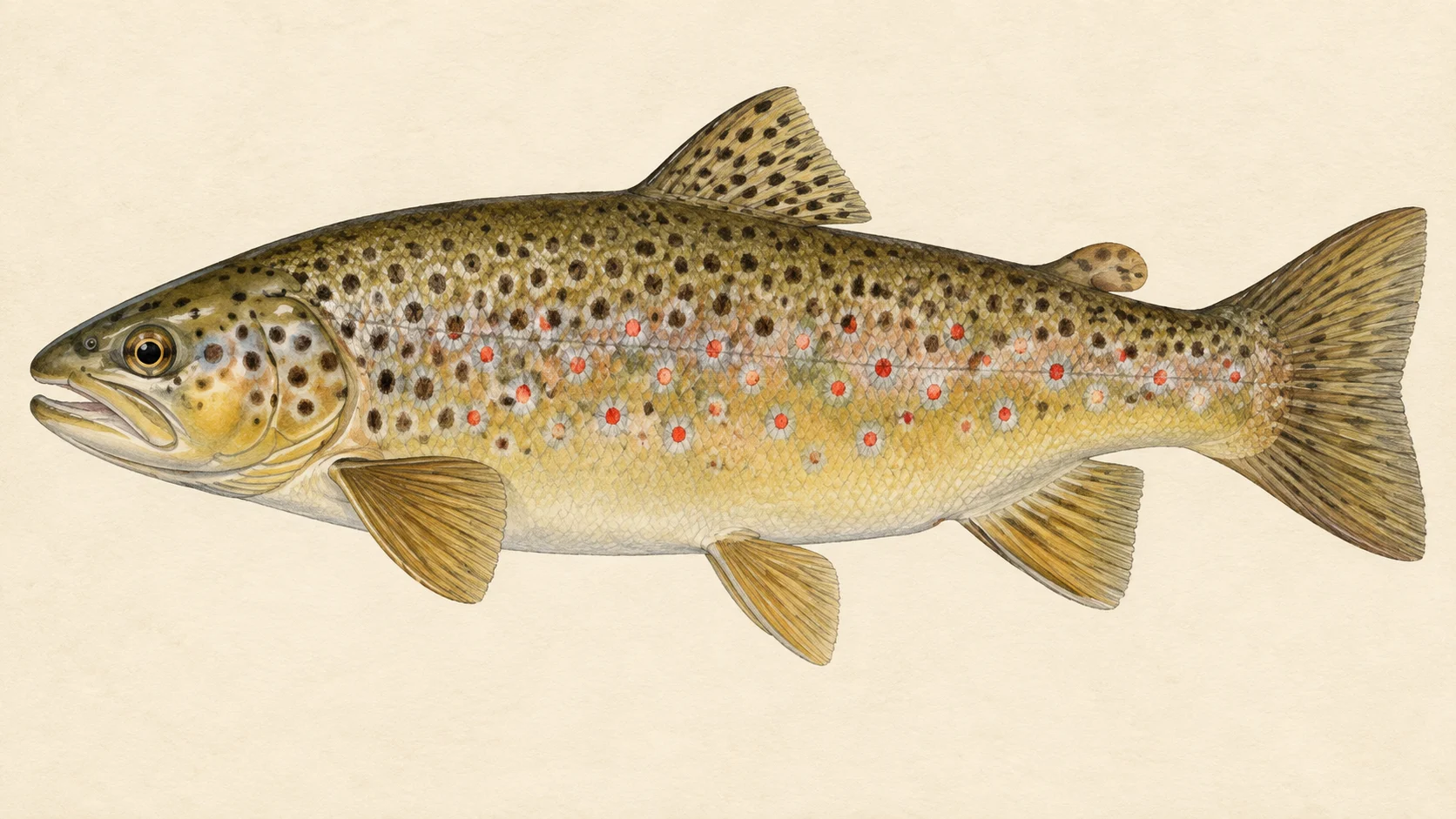
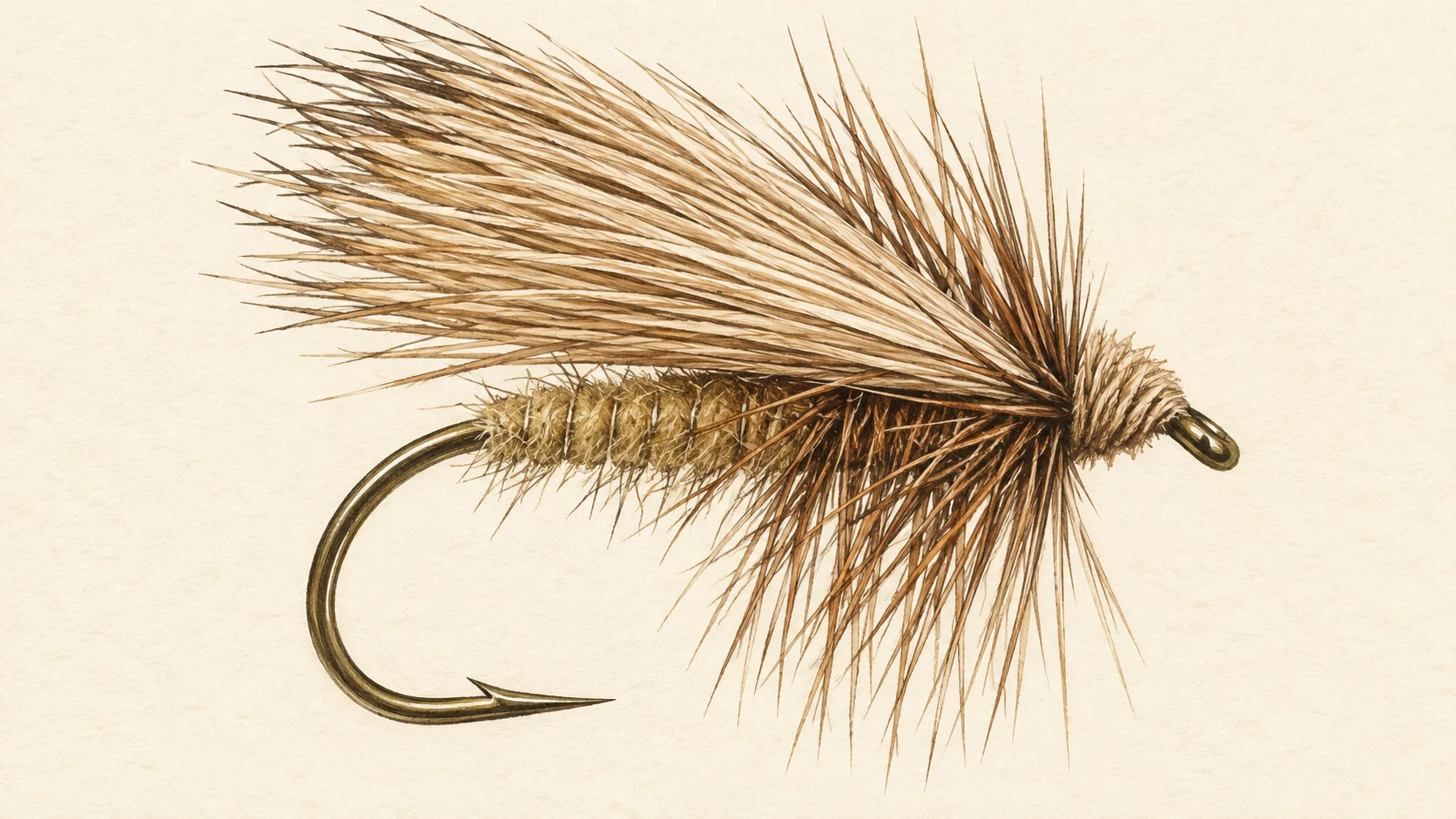
The St Patricks River is a wild brown trout stream in Tasmania, and the reason to fish it is the dry fly: caddis hatches through summer on shallow water you can wade.
FlyLife's writers describe good angler access from Nunamara to Corkerys Road, among farms.
Come in summer, with a caddis dry as your first fly. Stick to the river and the access points, and read the Inland Fisheries Service guide before you go.
Start with a size 12 to 16 Elk Hair Caddis, and fish the shaded pockets first.
Water and habitat
FlyLife describes the St Patricks as a shallow freestone stream lined by native vegetation and willows, with gravelly runs and pools that make wading straightforward. The fish sit in shallow water or in shaded pockets behind the willows, so you rarely need to look for depth.
Its headwater trout are reported to stay fat and healthy through dry summers, which FlyLife puts down to the spring-fed water quality of the meadow.
Fish and forage
Brown trout are the fish here, and FlyLife describes a large wild population. Through summer the food is caddis, then late summer hoppers, then small mayfly such as blue-winged olives in autumn.
That order is a good guide for the fly box: caddis dries for summer, a hopper when the grass is dry, and something small and olive once the mornings cool.
When to fish it
FlyLife's writers describe fantastic caddis hatches through summer, with some of the best between Christmas and New Year. Late summer brings hoppers, and autumn brings small mayfly hatches. Treat that as FlyLife's timing, and take the actual season from the Inland Fisheries Service guide.
How to fish it
The river's flies table lists an Elk Hair Caddis and a yellow Humpy, both in sizes 12 to 16 for brown trout. In our experience the caddis is the better first choice when fish are working the surface, and the Humpy is a good second pattern when you want something you can see in broken water.
Work the shaded pockets behind willows first, then the runs, moving upstream so you approach fish from behind.
Access and safety
FlyLife describes access as good, with many bridges and angler-access points from Nunamara to Corkerys Road, and asks anglers to stick to the river and use those points among farms. Respect any fence or sign you meet.
As on any bush river, tell someone where you are going and when you will be back, and watch your footing on wet gravel.
Regulations
Check the current Tasmanian Inland Fisheries Service guide before you fish, including its closed-waters list, and take season, bag and size limits and licence requirements from it.