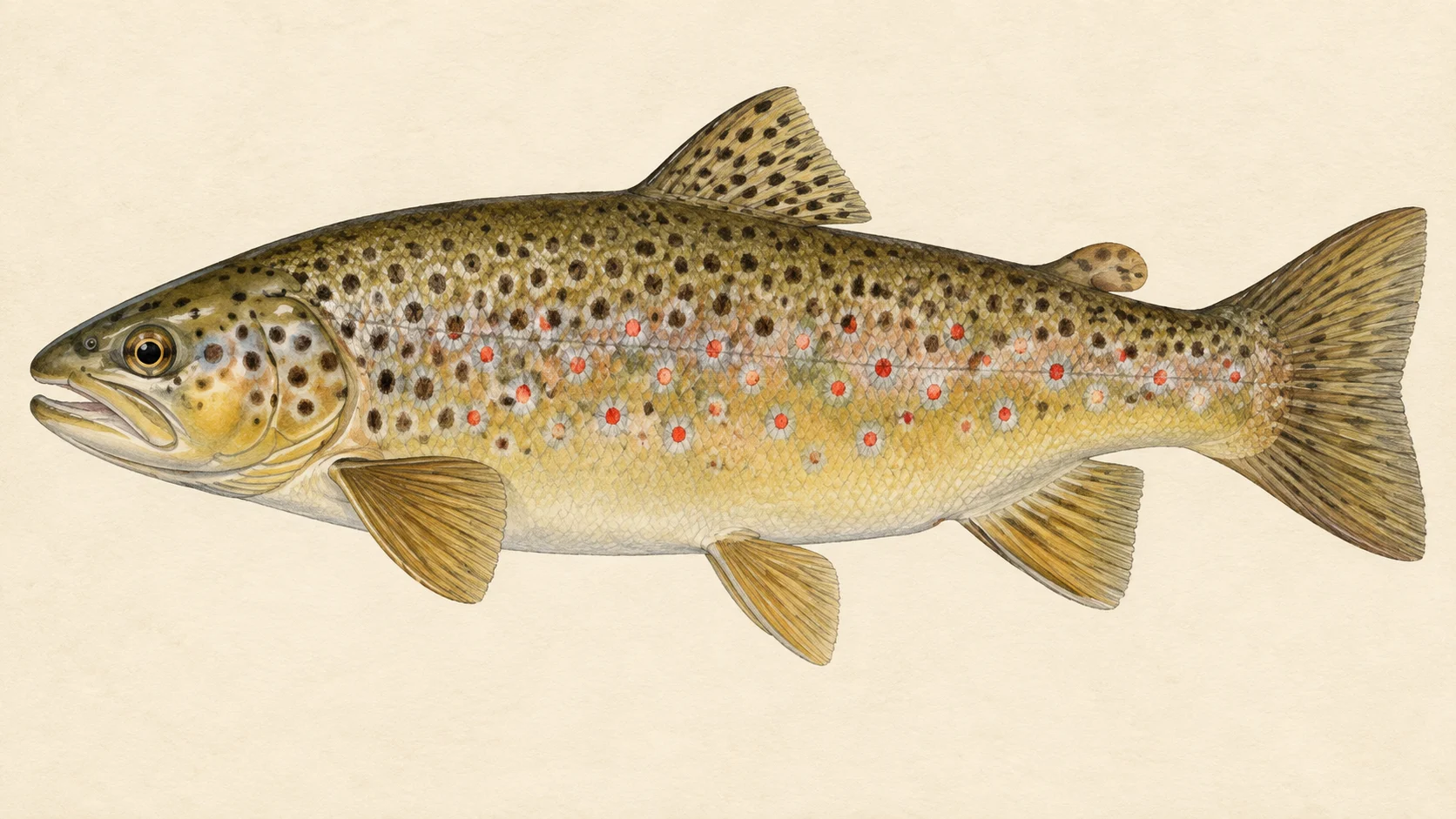
The Big Badja River is a brown trout stream in New South Wales, and the browns are the reason to come. They are on record in the river, and the state has released more of them in recent seasons.
The Big Badja is a tributary: it runs down to join the Numeralla River. In our read it fishes as a small stream, taken pool by pool rather than in long reaches. How it changes along its length is something you learn by walking it, so treat each access point as its own short beat.
The easiest trip is a half-day walk from one of the named access sites on the card. Start at the site nearest you, fish upstream with a dry and a nymph, and cover every run and pool for an hour before you decide whether to stay or move. Brown trout are the species, spring into autumn is when we would plan to come, and no water-specific rule was found: check the current NSW synopsis for the trout season and any closed waters before you go, because that decides whether you can fish at all.
The second trip is an autumn one. As the water cools, browns on a stream like this tend to feed harder and sit in the deeper pools and under the banks, and a small streamer swung slowly through that water is a good bet when the dry goes quiet. In our experience autumn is the best time to fish a small brown trout stream.
Summer can be worth it too. Warm afternoons put beetles, ants and hoppers on the water, and a brown under an overhanging bank will often take a small terrestrial. Fish the mornings and let the fish rest in the heat of the day.
Pick an access site from the card, check the synopsis, and walk upstream with a dry and a nymph.
Water and habitat
The Big Badja is a tributary stream that flows into the Numeralla. Read it the way you would most small trout water: as a chain of runs and pools. Browns hold where the current brings food to them without making them work: the seam at the head of a pool, the slower water beside a fast run, a cut bank, a snag or the shade of a leaning tree. The deepest pool in any stretch is where the better fish usually sit, and it is also where they go when the sun is high or the water is low.
Fish and forage
Brown trout are the fish here. They are recorded in the river, and the stocking chart shows the seasons in which the state has added more. In our experience, stocking means you are likely to meet younger fish alongside whatever wild browns the stream holds, which is good news for a first visit: stocked browns are usually easier to fool in their first season.
On a stream like this, browns feed on mayfly and caddis nymphs from the bottom, on whatever hatches come off in the warmer months, and on land insects that fall in. That points to a simple box: Pheasant Tail and Hare's Ear nymphs, an Elk Hair Caddis, a parachute Adams or a Royal Wulff for the surface, a foam beetle or small hopper for summer, and a dark Woolly Bugger for the bigger fish.
When to fish it
Check the current NSW synopsis first, because the rule, not the weather, decides whether you can fish. Within whatever months it allows, this is how we would read a small brown trout stream:
- Spring. The water is cool and often up. Nymphs through the runs are the most reliable method; watch for the first rises in the afternoons.
- Summer. Terrestrial time. Fish early and late, rest the fish in the heat, and put a beetle or hopper tight to the banks.
- Autumn. Our pick. The browns feed before winter and the bigger fish are more willing to chase a streamer.
How to fish it
Walk upstream. Trout face into the current, so coming from below keeps you behind them, and a short accurate cast at the head of a run does more than a long one across it. Keep low, keep your shadow off the water, and spend a few minutes watching a pool before you cast into it.
A dry-dropper is the rig we would start with: a buoyant dry in size 12 or 14 with a beaded nymph in size 14 or 16 on a short dropper. It covers the top and the bottom of shallow water at once, and the dry tells you when a fish takes the nymph. In the deeper pools, lengthen the dropper or switch to a heavier nymph under an indicator. When nothing is showing, swing a small Woolly Bugger across and down through the tail of each pool.
A 3 to 5 weight rod of about 8 to 9 feet, a floating line and a 9-foot leader tapering to 5X is plenty. Carry a spool of 4X for the streamer.
Access and safety
The access card lists the named angler access sites from NSW DPIRD. Use them as the places to start. They describe where anglers get to the water; they do not give permission to cross private land, so read any signs, leave gates as you find them, and ask a landholder when you are unsure.
As on any bush stream, tell someone where you are going and when you will be back, wear boots with real grip for wet rock, and do not wade water you cannot see the bottom of. If the water starts to colour or rise, get out and head for the bank.
Regulations
No water-specific rule was found for the Big Badja River. Check the current NSW Department of Primary Industries and Regional Development freshwater fishing guide before you fish, including its trout season, bag and size limits, gear rules, licence requirements and closed-waters listings.