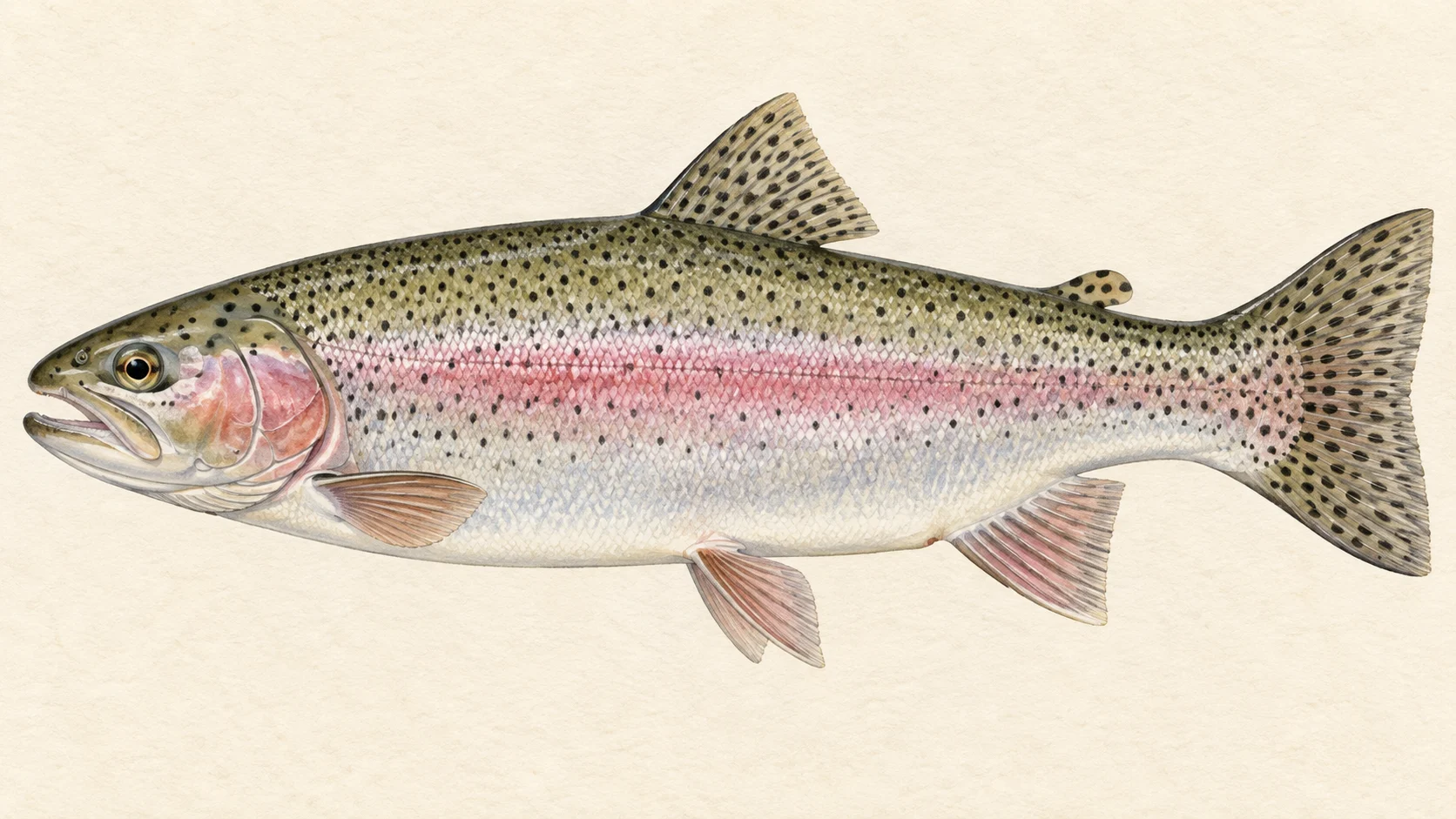
Talbingo Reservoir is a stocked dam near the town of Talbingo, and the reason to come is its rainbow trout, which the state has put into it season after season.
Think of it as one body of still water with two ways onto it. A boat ramp puts you on the open water, and a handful of listed angler access sites get you onto the edges. Everything else about the day comes down to the wind and which of those two you choose.
The easiest trip is a boat or a kayak off the listed ramp in spring, for stocked rainbows cruising the warming margins. Before you go, check the current NSW DPIRD freshwater guide and its closed-waters list, because that guide sets the season and the limits you fish under. Start on a windward bank or a drift off a point, and cover water with a slow-stripped wet fly.
The second trip is from the bank, at first and last light through summer and into the cooler months. Pick one of the angler access sites on the card, walk the margin rather than planting yourself, and fish small flies on a calm evening and wets on a windy one. It is slower going than the boat, but it is the trip to take if you do not have a craft.
Trout cod turn up in the release history too. If a trout cod comes up, check the current guide before you do anything but release it. In our experience a trout-focused trip is the better use of your time.
Check the current NSW DPIRD freshwater guide, choose a site from the access card, and start with the wind in your face.
Water and habitat
A dam at Talbingo. The wet-surface chart shows how the dam's footprint has behaved over time, which in our experience is a fair guide to whether the edges you fish in one season will be there in the next.
On a stocked dam of this kind, fish hold where food concentrates: along the drop-off where the shallows fall into deeper water, off points that push into the wind, and near any inflow where a creek brings in cooler water and drifting insects. Those are the places to start.
Fish and forage
The stocking chart shows rainbow trout released here in every recent season on the chart and trout cod in most of them. Read the chart as a history of releases rather than a head count of what survives to be caught.
Stocked rainbows in still water feed on what the lake gives them: midges, damselfly and dragonfly nymphs, snails, small baitfish and whatever land insects the wind blows on. In practice that means a fly box built around a few size 10 to 14 wets and nymphs such as a Hare's Ear and a dark Woolly Bugger in two weights, plus a handful of small emergers for calm evenings.
When to fish it
Spring is the start of the best of it in our experience. Stocked rainbows cruise the warming edges and take a moving fly readily. Summer pushes fish deeper through the middle of the day, so plan on dawn and dusk and watch for a rise on calm nights.
Autumn often brings fish back onto the edges as the water cools, and a larger fly at first light is worth the effort. Through winter the fishing slows, but a slow wet fly on a windy shore can still take fish. Whatever the month, check the current NSW guide before you go.
How to fish it
Treat it as a stillwater. A 6-weight rod with a floating line and an intermediate covers most days. Fish the wind: a breeze blowing onto a bank stacks food and fish against it, and a drifting boat lets you cover a lot of water with a team of wets fished loch-style.
From the bank, walk and cast. Short, slow strips with long pauses suit stocked fish. When fish are rising on a flat evening, drop to a long leader and a single small emerger, and put it in front of a cruising fish rather than on the ring it just left.
Access and safety
The access card names the sites: a boat ramp listed by Maritime NSW and a set of angler access sites listed by NSW DPIRD. Those listings describe where people get on the water; they are not a promise that every site is open on the day you arrive. Check current land-manager and ramp advice first.
As on any open dam, wear a lifejacket in a boat or kayak and turn back early if the wind gets up, because open water builds a chop quickly.
Regulations
Check the current NSW Department of Primary Industries and Regional Development freshwater fishing guide before you fish, including its closed-waters list and the trout and salmon closure notices. That guide sets seasons, bag and size limits and licence requirements. If you catch or target trout cod or any other native fish, check the same guide for how that species is treated.