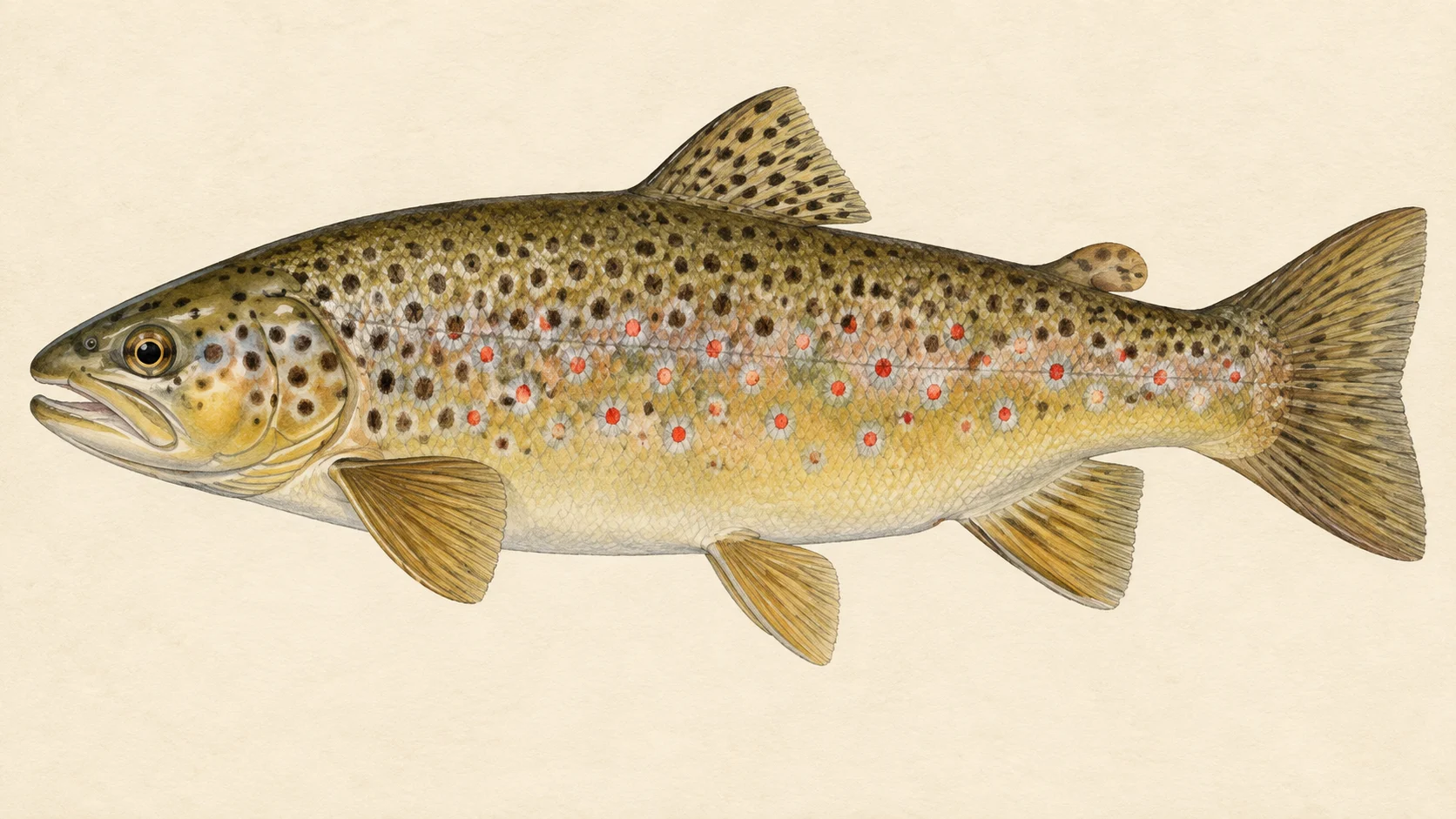
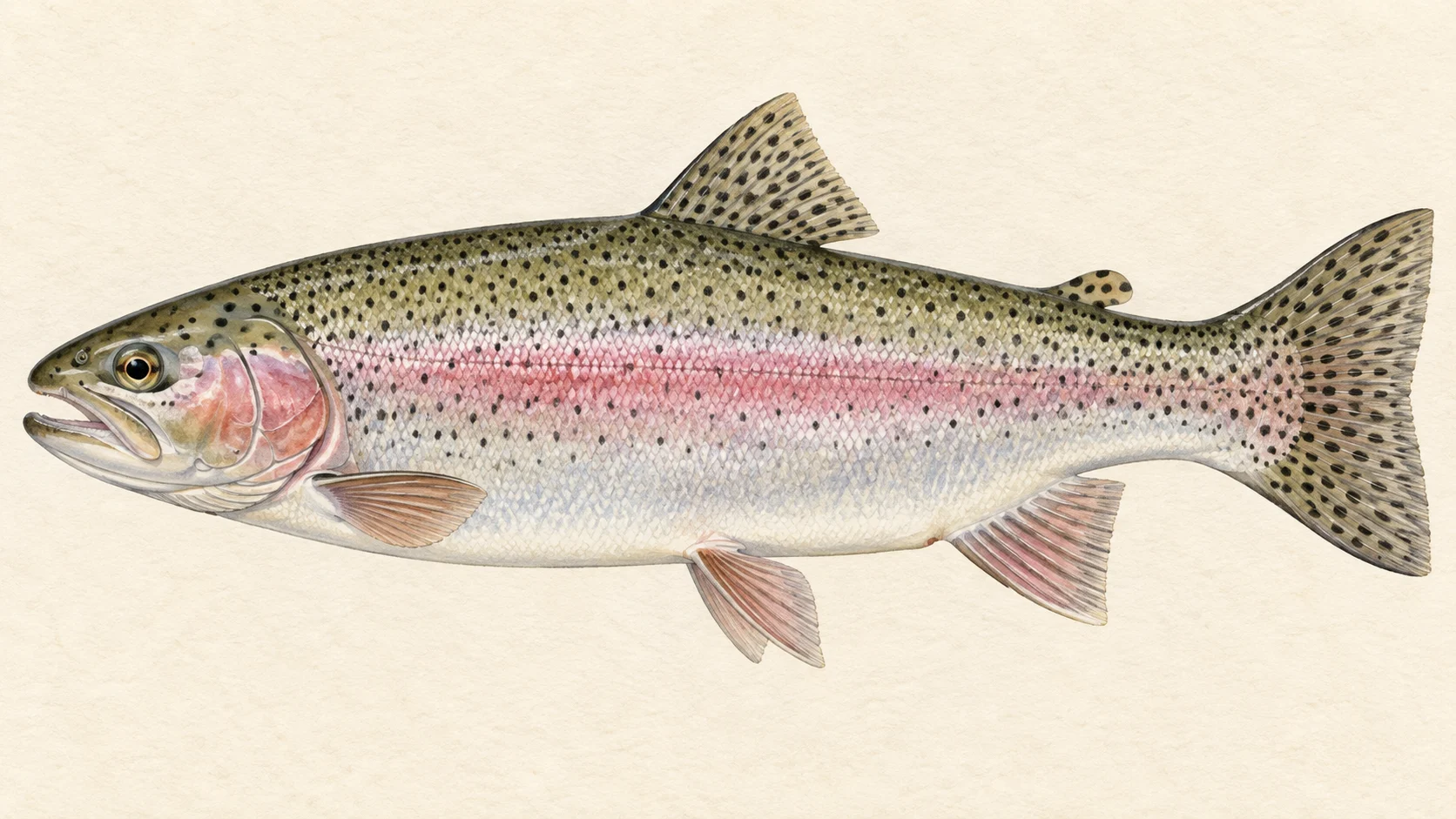
Lake Augusta is a brown trout lake up in Tasmania's Western Lakes, with a boat ramp near the dam wall. Rainbow and brown trout populate it, with brown trout the more dominant.
It comes in two parts. The original lake sits near the dam wall and stays mostly under water. A larger, newer area was flooded when Hydro Tasmania built Augusta Dam for power generation, and that newer ground is the part that changes: each year the water recedes and exposes much of the new lake bed. Because Hydro works the lake, the level can shift often, so the edge you fish in one week may not be there the next.
The easiest trip starts at the boat ramp on the old lake near the dam wall. Launch, drift the edges of the older water and look for browns moving along the rocks. Go slowly: large submerged rocks are scattered through the whole lake, and they come closer to the surface as the level drops. No water-specific rule was found for the lake; check the current Inland Fisheries Service guide before you launch.
The second trip is on foot along the newer, shallower ground. In our experience it suits walking and polaroiding. Pick a bright, calm day, walk with the sun behind you, and treat the drawn-down flats as terrain to read rather than a fixed shoreline. When the level is low, in our experience, the fish sit nearer the old lake than the new.
For both trips, carry a buoyant dry and a small dark wet fly. The dry is for fish you can see; the wet is for grey days when nothing shows.
Check the current Inland Fisheries Service guide, then pick your day by the weather: bright and calm for walking, anything else for the boat.
Water and habitat
Lake Augusta is a Hydro Tasmania storage. The original lake lies near the dam wall and stays mostly under water. The larger area around it was flooded when Augusta Dam was built, and much of that newer bed is exposed each year as the water pulls back. The persistence chart shows how much of the lake's surface has been under water from year to year. Read it before you walk to get a feel for how far the edge moves. In our experience, the ground that stays wet most years is where fish find cover and food.
The whole lake carries scattered large rocks under the surface. For a boat they are a hazard. For the fish they are structure, and in our experience a rock edge in a metre or two of water is a good first place to look.
Fish and forage
Inland Fisheries Service records both rainbow and brown trout in Lake Augusta, with brown trout the more dominant. Three small native fish are also found here: climbing galaxias, spotted galaxias and the western paragalaxias. Trout will eat small fish, so a slim dark wet fly around size 10 or 12 is worth a place in the box beside your dries.
When to fish it
The weather matters more than the date. In our experience, the Western Lakes fish best for polaroiding in the warmer months, on bright days with little wind, when you can see into the water. Because the level is set by Hydro rather than the season, check the lake on the day and fish the edge you find.
Check the current Inland Fisheries Service guide for the season that applies before you plan a trip.
How to fish it
From the bank, walk slowly and look before you cast. A fish cruising the edge wants a single accurate cast a metre or so ahead of it. A buoyant dry such as a Royal Wulff in size 12 or 14 is a sensible first fly, because it floats well in a wind chop and you can see it. If a fish refuses it, try something smaller and drabber rather than casting again and again.
When you can't see fish, search. Cast a dry along rock edges and wait longer than feels natural before you move it. If nothing comes up, change to a small dark wet fly and work it slowly past the same rocks.
From a boat, drift the edges of the old lake with the wind and cast ahead of the drift toward the shallows. Keep the motor slow near the bank and in any shallow water, for the rocks as much as for the fish.
Access and safety
The boat ramp sits on the old lake near the dam wall. Large rocks lie under the surface throughout the lake, and the level can change often. Run slowly, keep a lookout at the bow, and expect rocks to be shallower than you remember when the water is down.
If you are on foot, treat the exposed lake bed with care. As with any drawn-down storage, test soft ground before you commit your weight, and take the weather seriously on the plateau: carry warm, waterproof layers even on a fine morning.
Regulations
No water-specific rule was found for Lake Augusta. Check the current Tasmanian Inland Fisheries Service guide before you fish, and do not assume the lake follows the same rules as its neighbours.