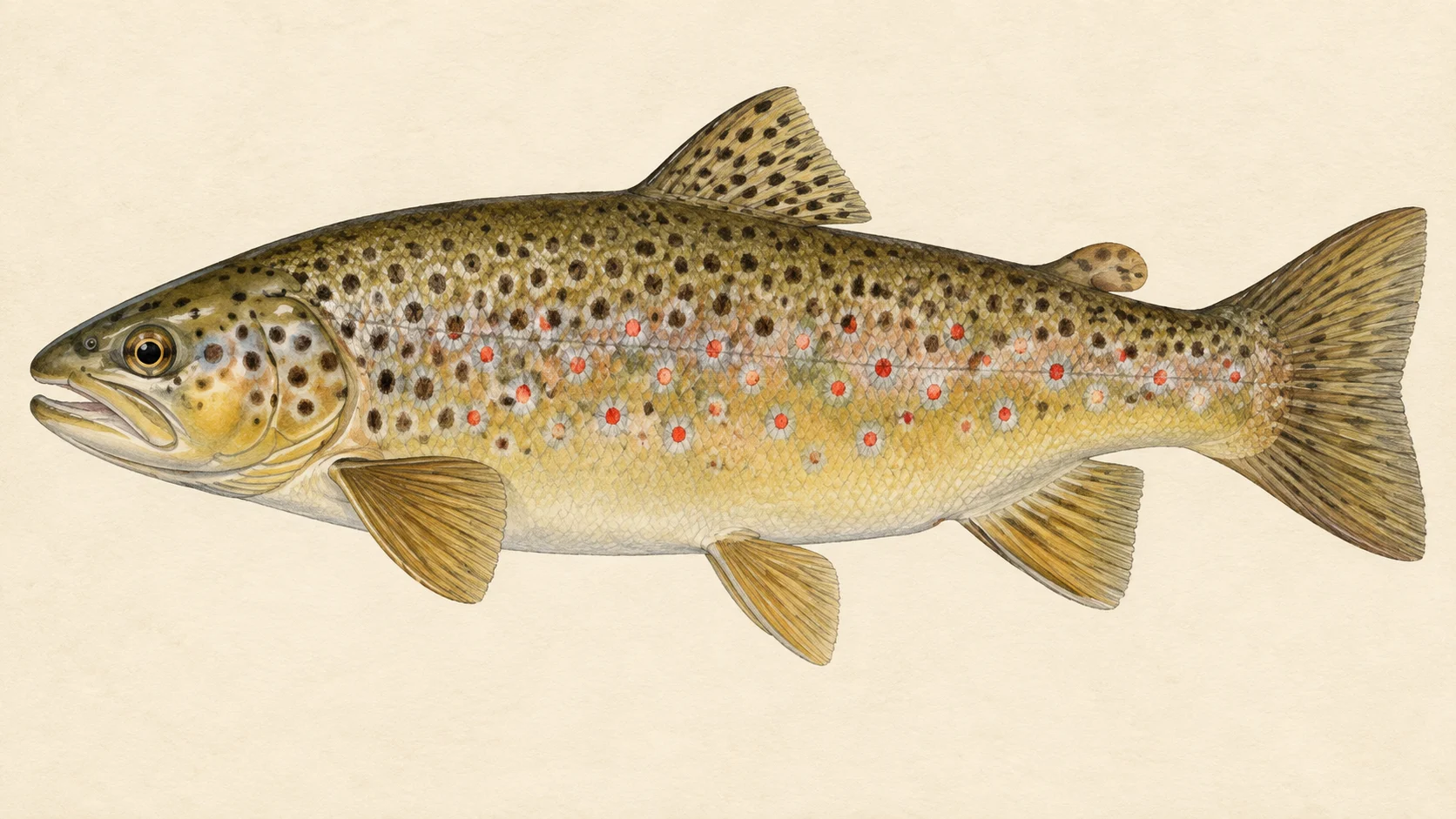
The Loch is a small, tight stream that joins the La Trobe at Noojee, and it holds a very good population of wild brown trout. Its banks are lined with tree ferns, and sections open up enough to cast.
Fish it as one river. Trout are spread from the La Trobe confluence right to the headwaters.
Loch Valley Road runs beside it, so you can pick your spot. Start with a single dry fly; when the river is high and fast, fish a nymph under a dry in the softer water.
Read the Victorian Fisheries Authority guide before you go.
Water and habitat
The Loch is a freestone stream with a gravel bottom, small and tight where it joins the La Trobe at Noojee, and lined with tree ferns. The water is overgrown in places, but sections open up and give you room to fish. Trout are spread through the whole river, from the La Trobe confluence to the headwaters.
Fish and forage
The fish to plan for are wild brown trout. River blackfish are also recorded in the Loch. FlyLife's writers describe the trout as eating a wide range of food of all sizes.
When to fish it
Check the current Victorian Fisheries Authority guide for any season that applies before you plan a date. Through most of the season, FlyLife's writers describe the river sitting at a height that suits a single dry fly. When it runs high and fast, expect to fish a nymph under a dry instead.
How to fish it
Start with a single dry fly. When the Loch is high and fast, look for the softer water and fish a nymph under a dry there; it takes plenty of trout. On a river this small and tight, a short, light rod is the sensible choice, so leave the long one at home.
Access and safety
Loch Valley Road runs beside the river, with plenty of access along it, and a few campgrounds also put you on the water. Treat that as a description of the country, not permission, and respect any fence or sign you meet on the ground.
As on any bush river, tell someone where you are going and when you expect to be back, and watch your footing on wet rock and among the overgrown banks.
Regulations
Before you fish, read the current Victorian Fisheries Authority inland angling guide, check its closed-waters list, and take any season, bag and size limits and licence requirements from it.