Australia Fly Guide
VIC · Loddon (South)

Cairn Curran Reservoir

Imagery © Esri

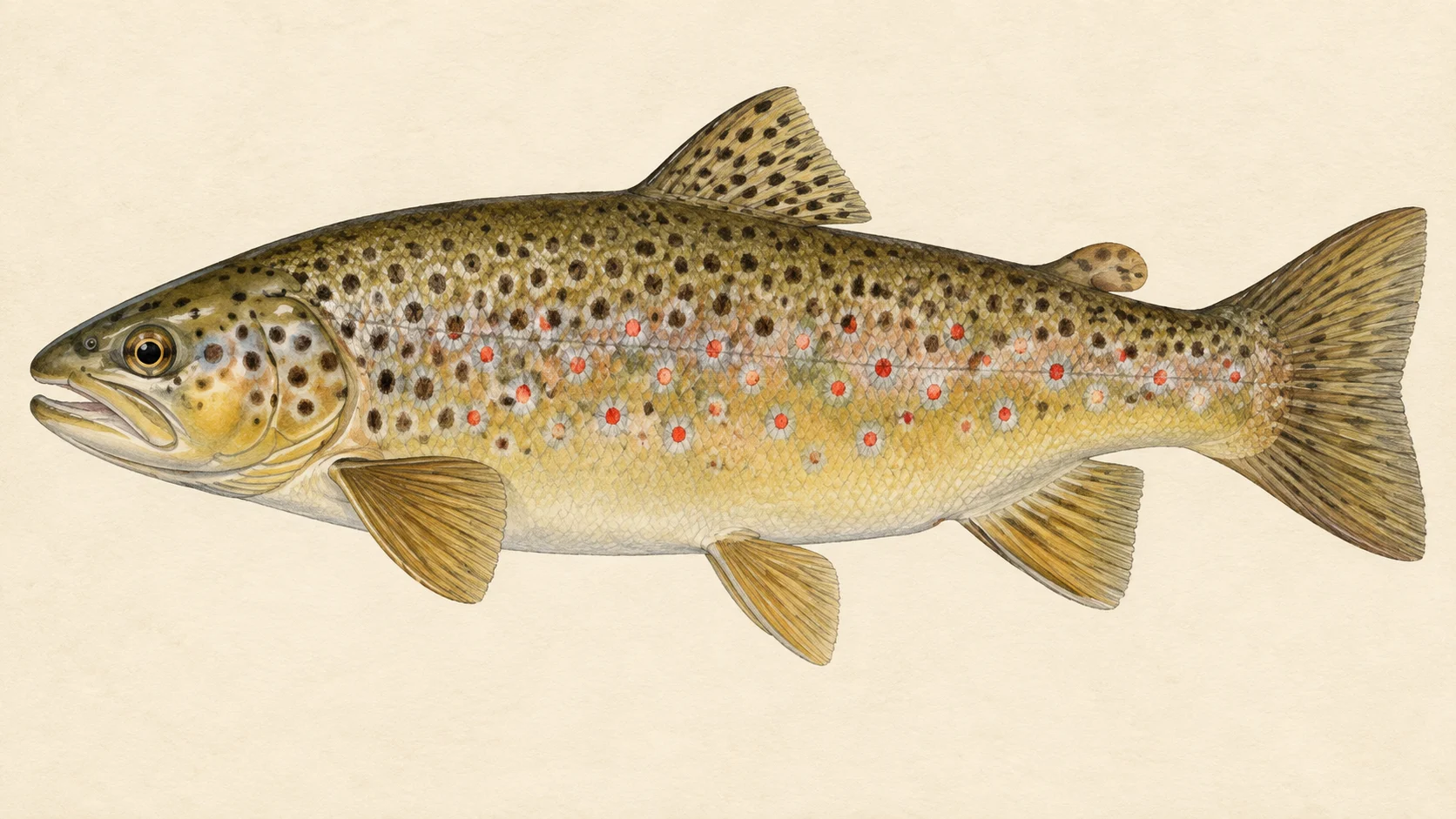
Cairn Curran is a stocked central Victorian storage where the fish you chase changes with the season: brown trout in the cooler months, golden perch in spring and Murray cod through summer.

FlyLife's writers describe it as a large irrigation storage on the Loddon, west of Castlemaine, and you fish it as one big body of water. What divides it for an angler is not a wall or a gorge but the calendar and the edge. The shoreline is grass in places, rock and weed in others, and there is standing timber, and each species uses that edge in its own month.

The easiest trip is on foot in the cooler months for trout. FlyLife's writers describe plenty of shoreline reachable on foot, and they describe the late-winter fishing as the pick: as the level drops ahead of the spring refill, yabbies leave their burrows and trout cruise the margins picking them off. No water-specific rule was found for the lake, which in practice means you take your licence and limits from the current Victorian guide before you set out. Walk the edge, look first, and cast to a fish you can see.

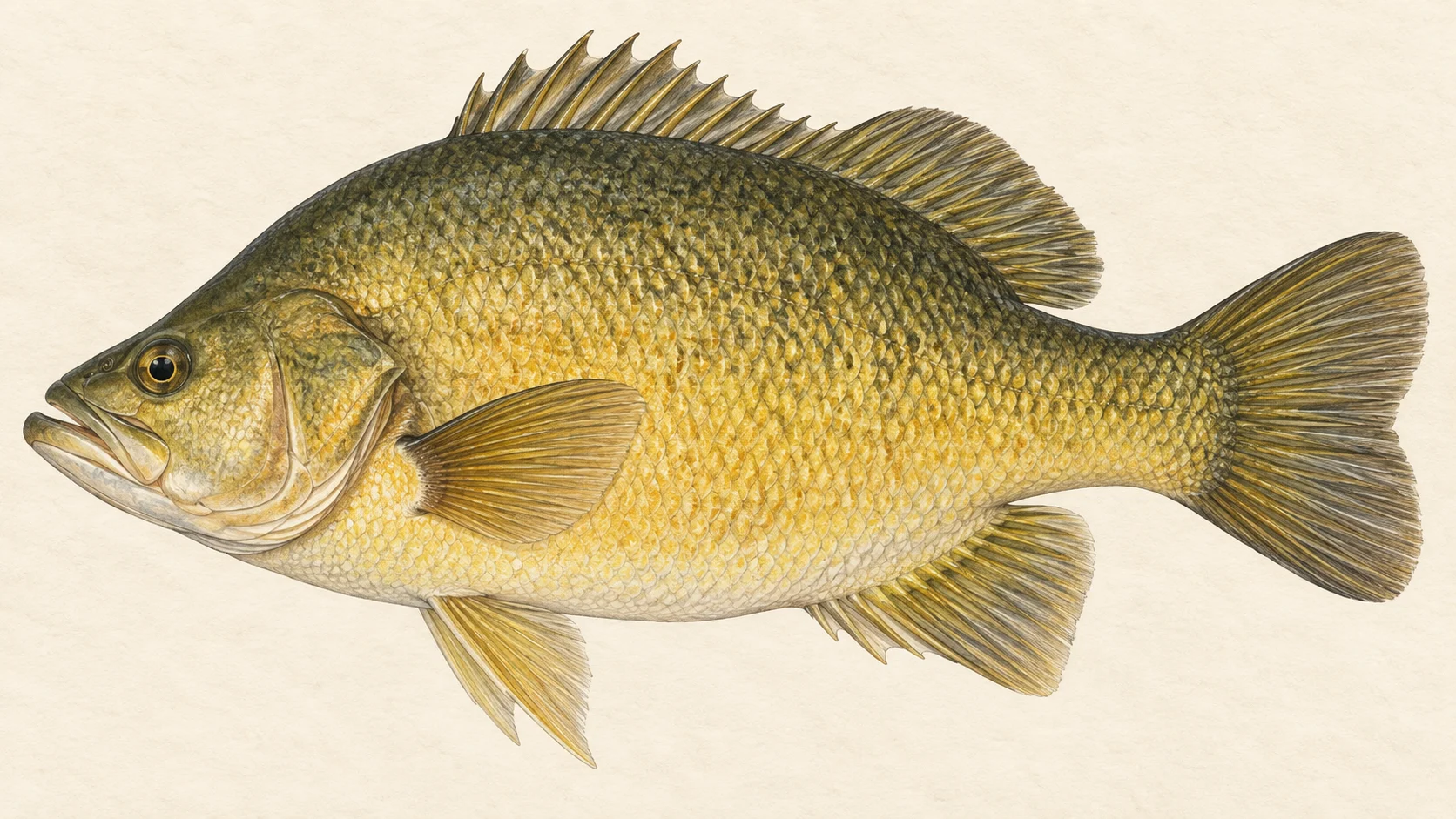
The second trip is spring, for golden perch. As the water warms they push onto the edges and into the shallows, and a big streamer fished slowly past rock, timber and weed is how you meet them. Wade the shallows or work the timber from a boat.

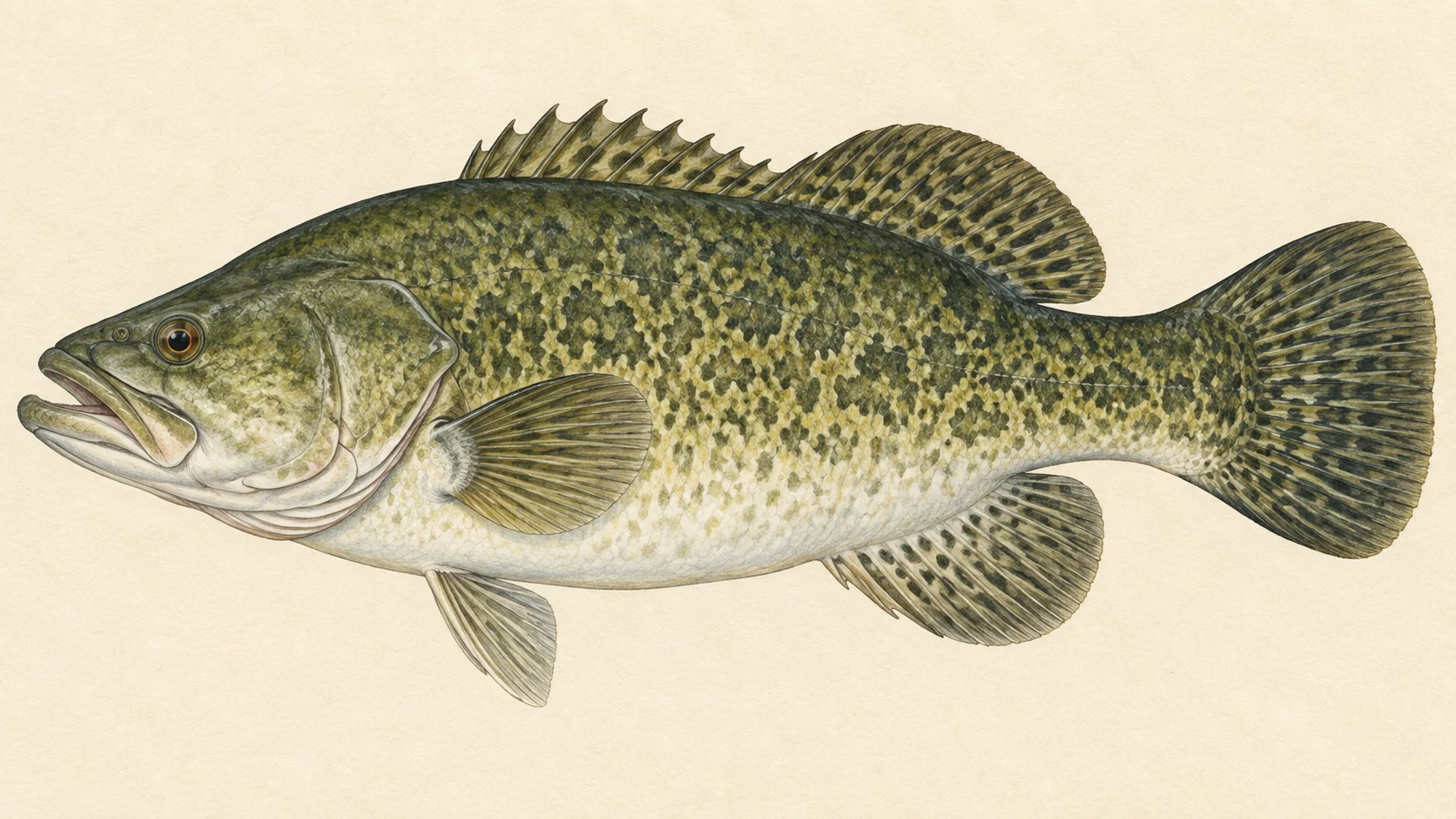
The third is summer, for Murray cod. They come on in the warmer water, and FlyLife's writers say the small and medium fish chase big streamers much as the perch do. Check the current Victorian guide for Murray cod before a summer trip rather than at the ramp. Go at first and last light, and take the heavy rod.

If you have one trip to give it, go in late winter, walk the shoreline and look for cruising trout.

Water and habitat

FlyLife's writers describe a large irrigation storage whose level falls ahead of a late-winter and spring refill, so expect the edge to be in a different place from one trip to the next. The persistence chart shows how much of the basin has held water over the years, which is the best guide to how much the edge moves on you.

The shoreline is the fishery. FlyLife's writers describe grass, rock, weed and standing timber along it, and in our read each suits a different fish. Grassy flats that go under as the lake refills are a good bet for trout feeding on whatever the rising water flushes out. Rock and timber are ambush cover for golden perch and cod. Weed edges hold small fish, and small fish bring the predators.

Fish and forage

Three stocked fish make this a mixed fishery. The stocking chart shows brown trout, golden perch and Murray cod going in across many seasons, which is why all three are worth planning a trip around. Rainbow trout are in the stocking history too, but only barely, so do not come for them.

Australian smelt and flathead gudgeon are recorded here, and in our experience small fish like these are much of what perch and cod eat. That points you toward a streamer in the size and colour of a small baitfish. Yabbies are the other food, and FlyLife's writers describe them as the key to the late-winter trout fishing when the falling water pushes them out of their burrows. A yabby pattern in the box is a good bet through late winter.

When to fish it

Cooler months, roughly May to September. Trout. FlyLife's writers rate these months as the best of the trout fishing, and the late-winter drawdown before the spring refill is when yabbies come out and trout cruise the edge. Summer evenings and nights can still fish well for trout, by the same writers' account.

Spring, September to November. Golden perch, as the water warms and they push into the shallows. In our experience the first run of warm, still days is the time to be there.

Summer, December to March. Murray cod, in the warm water, alongside the golden perch. Fish the low-light hours; the middle of a hot day is for travelling.

Autumn. A changeover. In our read it is a good bet for the last of the perch and the first of the trout as the water cools, and worth a trip if you are prepared to switch rods.

How to fish it

Trout. Treat it as a sight-fishing edge first and a blind-fishing lake second. Walk slowly with polarised glasses, keep back from the water, and look for a fish cruising the margin before you cast. A five or six weight with a floating line and a long leader is enough. FlyLife's writers find small wet flies, nymphs and streamers the most consistent, with a dry fly worth tying on only when fish are rising. A small yabby pattern or a Woolly Bugger in brown or olive, dropped ahead of a cruising fish and moved in short twitches, covers the late-winter fishing. When nothing shows, strip a small streamer parallel to the bank.

Golden perch. Go up to a seven or eight weight and a sinking or intermediate line. Put a big dark streamer tight to rock, timber or a weed edge, let it sink, and bring it back very slowly with long pauses. FlyLife's writers say the key for the natives is those edges, or finding baitfish; if you see small fish scattering, fish there.

Murray cod. The same approach on a heavier rod, eight to ten weight, with a short strong leader and a bigger fly. Cast past the timber, let the fly get down, and bring it back past the cover with pauses. The take often comes as the fly stops. Low light is the time, and a cod near the timber will take you straight back into it, so fish tackle strong enough to turn one. See Murray cod in the timber for the method in more detail.

Access and safety

FlyLife's writers describe plenty of shoreline reachable on foot and several boat ramps around the lake. They name Picnic Point, off the Joyces Creek to Baringhup road, and the north and south ramps at Woolshed Bay in the north-eastern corner as practical places to start by boat or on foot. The Victorian Fisheries Authority's fishing guide records funding to Goulburn-Murray Water for an all-abilities amenity block at Picnic Point.

Check that a ramp or shoreline is open to you on the day, and follow any signs from the water manager. As on any storage with standing timber, keep boat speed down near the trees, and treat a freshly exposed or freshly flooded margin with care underfoot. As on any big open water, watch the weather and stay close to shore in a small craft.

Regulations

No water-specific rule was found for Cairn Curran Reservoir. Before you fish, check the current Victorian Recreational Fishing Guide from the Victorian Fisheries Authority for the licence, the bag and size limits for trout, golden perch and Murray cod, and any closures that apply.
When things happen

The guide's calendar for this water

When things happen

The year on this water

A year at a glance; check current rules

  • Trout on the edges · May to Sep FlyLife's writers rate the cooler months as the best of the trout fishing. A good bet is to walk the margins early and late with a small nymph or wet fly, and a slow-stripped streamer when nothing shows.
  • Yabbies on the falling shoreline · Jun to Sep FlyLife's writers describe falling levels ahead of the late-winter and spring refill pushing yabbies out of their burrows, with trout cruising the edge to pick them off. Carry a small brown-olive yabby pattern and look before you cast.
  • Golden perch in the warming shallows · Sep to Dec FlyLife's writers describe golden perch moving onto the edges as the water warms through spring. A dark streamer crawled slowly past rock, timber and weed edges is the fly to start with.
  • Cod in the summer water · Dec to Mar FlyLife's writers list summer as the time for Murray cod, with small and medium fish taking big streamers. Fish the standing timber and rock at first and last light with a heavy rod.

What the record shows

Flows, river gradient, changing water levels, fish surveys and stocking

What the record shows

How wet the lake has stayed

Satellite record, 1986 to 2026

0% 25% 50% 75% 100% 1996 2006 2016 2026
The share of the mapped water body that was wet each month, from satellite imagery since 1986. This is not a level record — a satellite reads surface extent, never depth — but a shrinking wet area usually means a lower lake. Over 295 months on file the wet share has run from 4% to 99%; the latest reading is 62%, 2026-08.
Source: Geoscience Australia.
Source details and licence

Geoscience Australia — Digital Earth Australia Waterbodies v3 (wet-surface time series). Digital Earth Australia Waterbodies v3, Geoscience Australia, © Commonwealth of Australia, CC BY 4.0. retrieved 2026-08-16.

Stocking on record

3,871,577 fish in 193 records, 1990 to 2026

0 100k 200k 300k 400k 500k 1990: 20,000 brown trout in 5 records 1991: 20,000 brown trout in 4 records 1992: 20,000 brown trout in 4 records 1993: 20,000 brown trout in 4 records 1994: 45,000 golden perch in 1 record 1994: 10,000 murray cod in 1 record 1994: 20,000 brown trout in 5 records 1995: 50,000 golden perch in 1 record 1995: 20,000 brown trout in 6 records 1996: 20,000 murray cod in 3 records 1996: 20,000 brown trout in 5 records 1997: 19,000 golden perch in 1 record 1997: 10,000 murray cod in 1 record 1997: 20,000 brown trout in 4 records 1998: 50,000 golden perch in 1 record 1998: 10,000 murray cod in 1 record 1998: 20,000 brown trout in 7 records 1999: 20,000 golden perch in 1 record 1999: 20,000 brown trout in 6 records 2000: 50,000 golden perch in 1 record 2000: 18,000 brown trout in 5 records 2001: 16,000 golden perch in 2 records 2001: 18,000 brown trout in 5 records 2002: 30,000 golden perch in 2 records 2002: 15,100 brown trout in 5 records 2004: 8,000 brown trout in 2 records 2005: 10,000 golden perch in 1 record 2005: 9,610 brown trout in 4 records 2006: 20,000 golden perch in 1 record 2006: 10,000 murray cod in 1 record 2010: 20,000 golden perch in 1 record 2010: 20,000 murray cod in 2 records 2010: 5,000 brown trout in 1 record 2011: 20,000 golden perch in 1 record 2011: 20,000 murray cod in 1 record 2011: 25,000 brown trout in 4 records 2011: 5,000 rainbow trout in 1 record 2012: 25,000 golden perch in 1 record 2012: 30,000 brown trout in 2 records 2013: 9,000 golden perch in 1 record 2013: 10,000 murray cod in 2 records 2013: 27,000 brown trout in 5 records 2014: 20,000 golden perch in 1 record 2014: 25,270 murray cod in 2 records 2014: 30,000 brown trout in 4 records 2015: 20,000 golden perch in 1 record 2015: 10,000 murray cod in 1 record 2015: 20,000 brown trout in 3 records 2016: 55,000 golden perch in 2 records 2016: 20,000 murray cod in 1 record 2016: 14,500 brown trout in 3 records 2017: 75,000 golden perch in 1 record 2017: 70,000 murray cod in 2 records 2017: 27,071 brown trout in 3 records 2018: 106,936 golden perch in 3 records 2018: 131,406 murray cod in 4 records 2018: 30,000 brown trout in 5 records 2019: 150,900 golden perch in 2 records 2019: 49,544 murray cod in 3 records 2019: 30,000 brown trout in 2 records 2020: 100,000 golden perch in 1 record 2020: 95,000 murray cod in 2 records 2020: 25,000 brown trout in 3 records 2021: 105,000 golden perch in 2 records 2021: 140,000 murray cod in 3 records 2021: 10,000 brown trout in 2 records 2022: 150,000 golden perch in 1 record 2022: 10,000 brown trout in 3 records 2023: 50,000 golden perch in 1 record 2023: 381,000 murray cod in 3 records 2023: 10,000 brown trout in 1 record 2024: 200,000 golden perch in 1 record 2024: 263,950 murray cod in 3 records 2024: 10,000 brown trout in 1 record 2025: 120,000 golden perch in 1 record 2025: 44,280 murray cod in 1 record 2025: 10,000 brown trout in 2 records 2026: 202,000 golden perch in 3 records 2026: 195,010 murray cod in 3 records 2026: 10,000 brown trout in 1 record 1990 1995 2000 2005 2010 2015 2020 2025 2026
Golden Perch, 1,738,836 across 36 records Murray Cod, 1,535,460 across 40 records Brown Trout, 592,281 across 116 records Rainbow Trout, 5,000 across 1 record
Stocked in 33 of the 37 years from 1990 to 2026. These are individual release records. A record is not a promise that stocking continues, and not evidence of what is in the water now.
Source: Victorian Fisheries Authority.
Source details and licence

Victorian Fisheries Authority fish stocking database. retrieved 2026-08-21.

Conditions

What the gauges say

Check the water operator or jurisdiction authority for current conditions, and read the water yourself when you arrive.

Questions anglers ask

What fish are in Cairn Curran?

Brown trout, golden perch and Murray cod are all stocked, and the stocking chart shows each of them going in over many seasons. Rainbow trout have barely featured in the stocking, so treat one as a bonus. Australian smelt and flathead gudgeon are recorded as well, and they are the small fish the predators feed on.

When is the best time to go?

It depends what you want to catch. FlyLife's writers put the trout at their best in the cooler months, list golden perch as the spring highlight and Murray cod as the summer one. Pick the fish, and the season follows.

Do I need a boat?

No. FlyLife's writers describe plenty of shoreline you can reach on foot, and the trout cruising the edges in late winter are a walking and looking fishery. A boat helps you cover the timber for perch and cod, and the same writers describe several ramps around the lake.

Are there special rules for this lake?

No water-specific rule was found for Cairn Curran. Check the current Victorian Recreational Fishing Guide from the Victorian Fisheries Authority for the licence, bag and size limits and any closures before you fish.

Behind this page