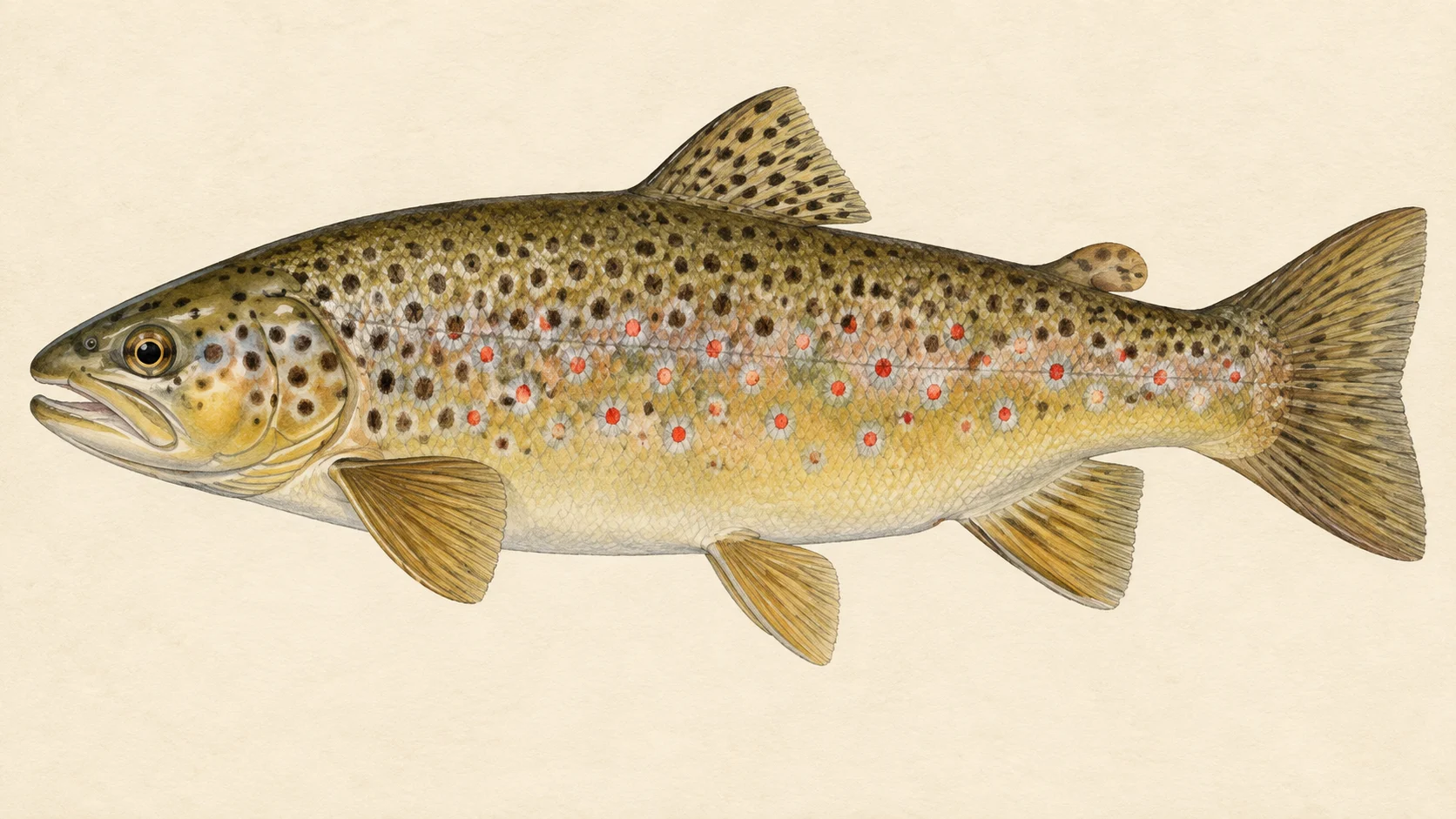
The Erskine is a short rainforest stream that runs through forested hills and into the estuary in the middle of Lorne, and it holds wild brown trout you can fish with a dry fly.
Erskine Falls cuts the river in two. Fish live both above the falls and below them, so you are not forced to choose a side.
FlyLife describes a walking track upstream from Lorne with good fishing the whole way; a dry fly is the natural choice.
Check the current Victorian Fisheries Authority guide before you fish.
Water and habitat
The Erskine runs through forested hills behind Lorne, past Erskine Falls, and finishes in a small estuary in the middle of town. The bed is bedrock, boulders and gravel, with some fallen timber.
Fish and forage
Brown trout are the fish to plan for, and they are wild, living both above Erskine Falls and below it. The ones described here are small.
Because the estuary sits in the middle of Lorne, the lowest water can also carry estuary species, and fish records for the river include black bream, congolli, yelloweye mullet, smooth toadfish and the common galaxias. Those are worth knowing about if a fish that is not a trout turns up. The trout are the reason to go.
When to fish it
The Erskine is described as suiting dry-fly fishing from the start of the season to the end, and early-season dry-fly fishing is a listed highlight.
Late summer needs more care. Even with the heavy rain the Otways get, the river can run low and warm then, and trout in the deeper pockets and pools can be very spooky. If you fish it in late summer, stay back from the water and work quietly.
How to fish it
A dry fly is the natural choice on the Erskine. Two flies are listed for the browns here: a CDC Sedge in sizes 12 to 16, and a Royal Stimulator in sizes 12 to 14. Either is a fair place to start.
Where the water is low and the fish are spooky, keep your approach quiet and change nothing else until you have to.
Access and safety
FlyLife describes a walking track along the Erskine from the mouth at Lorne up to Erskine Falls, with good fishing the whole way. Check locally that you can use it and the water beside it.
As on any bush stream, tell someone where you are going, take care on wet bedrock and boulders, and be careful around fallen timber.
Regulations
Read the current Victorian Fisheries Authority inland angling guide before you fish, and take any rules from it, not from this page.