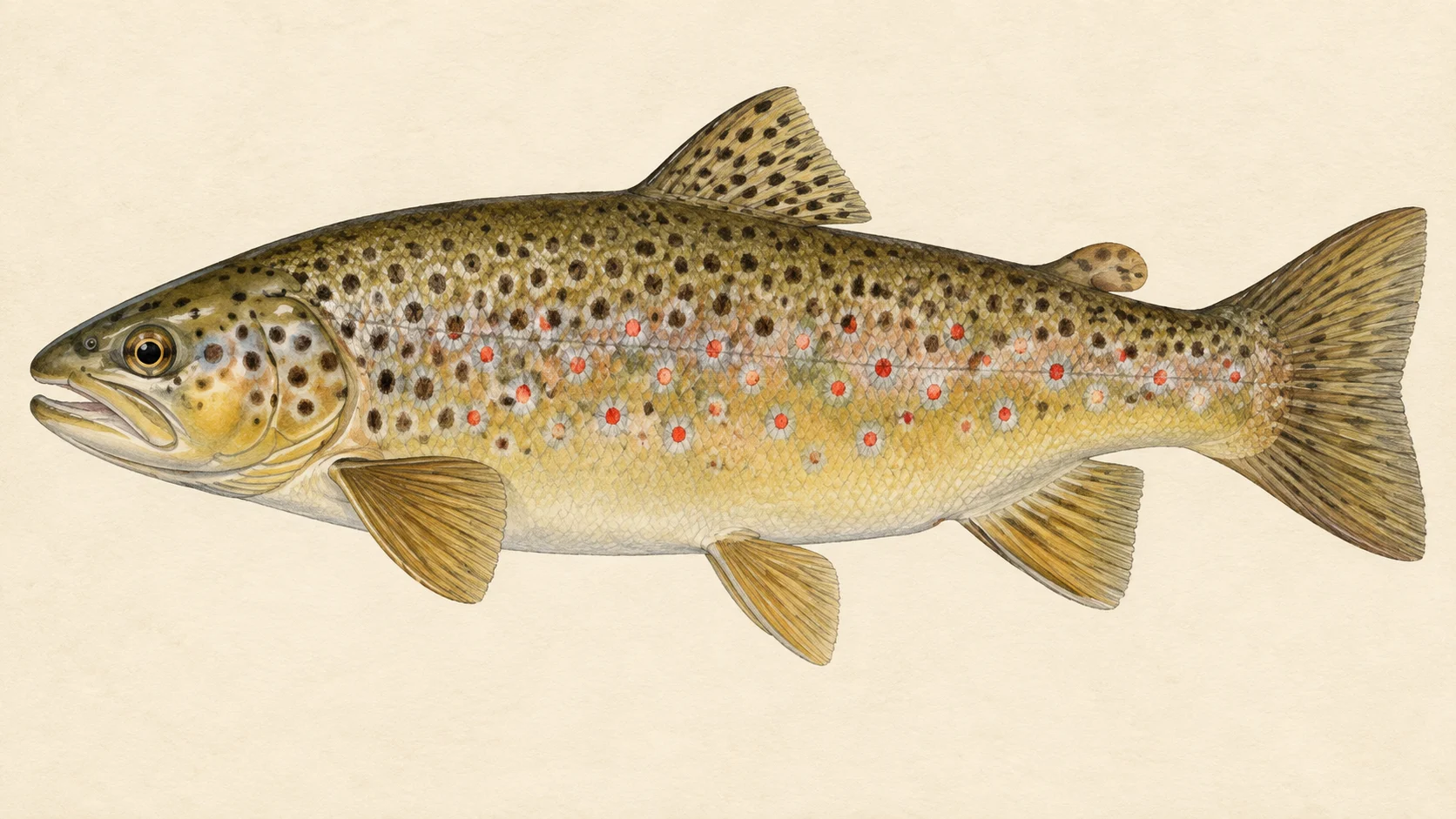
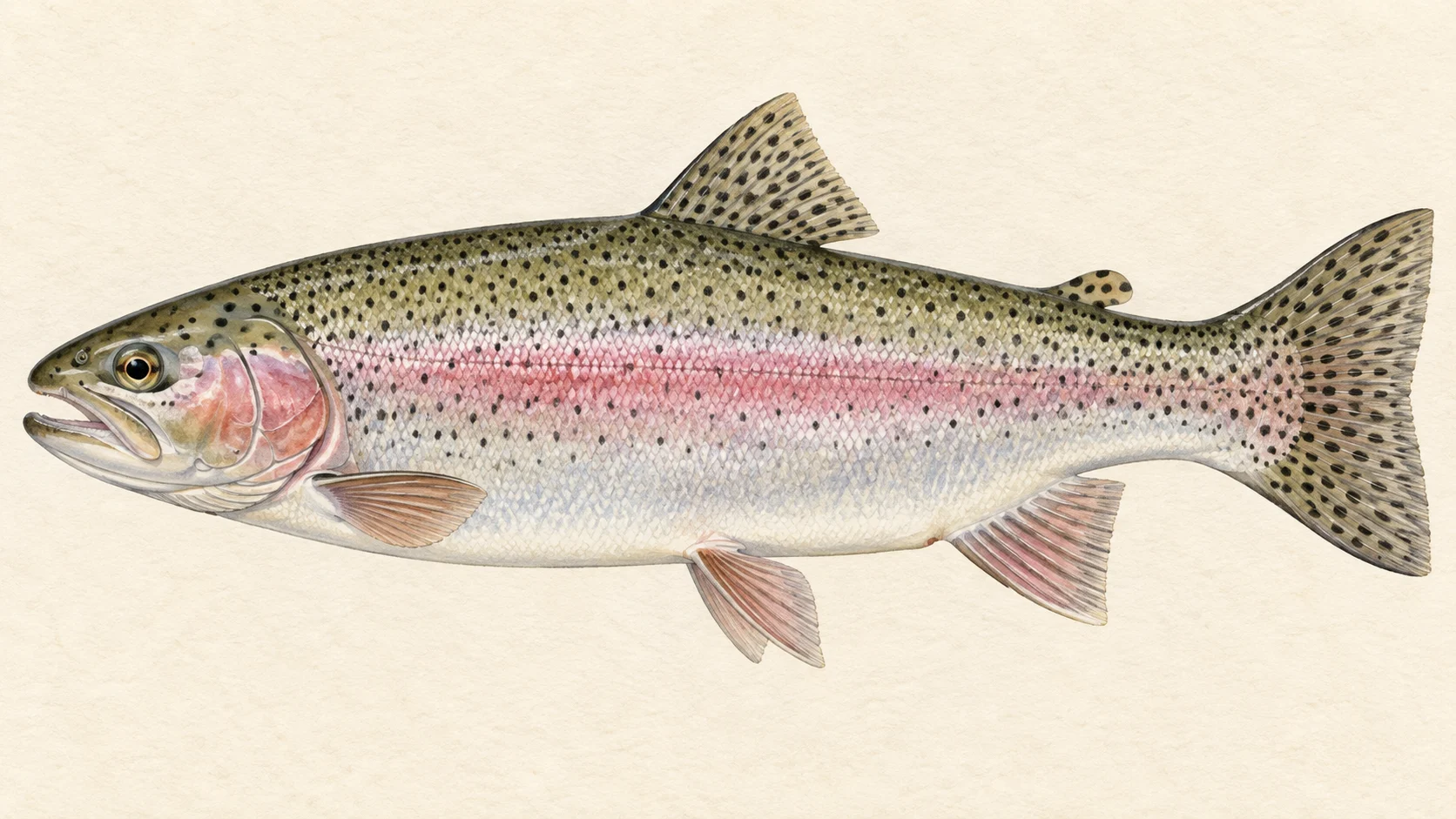
Hepburn Lagoon is a medium-sized storage a short drive west of Daylesford, and you make the trip for its brown and rainbow trout.
It is one round bowl of water in farmland, and you fish it on foot. Walk the shoreline: it looks featureless from the bank, but weed beds, grassy bays and rocky points sit around it.
Come in winter for baitfish streamers and smelting trout, in spring for mayfly, and in summer for mudeyes. Pick an overcast day if you can. Read the current Victorian Fisheries Authority guide before you go.
Water and habitat
The lagoon is a medium-sized storage surrounded by farmland, with grassy and rocky shorelines. At a glance it looks like a round bowl with little shoreline vegetation, and that first impression undersells it.
Walking it reveals weed beds, grassy bays and rocky points, and more variation than you would guess from the car park end. In our experience those are the places to spend your time: cover and edges, not the open bowl.
Fish and forage
Brown trout and rainbow trout hold here, and both have been stocked over many seasons. The stocking chart shows the pattern, so the practical read is a lagoon with a steady supply of both trout rather than a single stocked year to chase.
The lagoon is extremely fertile. Through a season you can meet mayfly, caddis, damsels, mudeyes and midge, and in winter the trout chase abundant baitfish. That spread of food is why your fly box wants insect imitations for the warm months and a few baitfish patterns for the cold ones.
Other fish are recorded in the lagoon as well, but the fishing here is about the trout.
When to fish it
Winter is for baitfish: streamers and other baitfish imitations produce quality fish, and smelting trout are a listed highlight. Spring is mayfly time, when trout look up and feed on mayfly and other insects. Summer mudeye fishing is a listed highlight.
Overcast conditions generally give the best fishing at Hepburn in any season. On a bright day, fish early or late and expect the trout to be harder work.
How to fish it
In spring, nymphs, small wets or dries fished blind or to risers are productive. If you see rises, cover them; if you do not, fish the edges of the weed beds and the points blind.
A Possum Emerger in sizes 12 to 14 and a Gold Humungous in size 10 are both listed for brown and rainbow trout here, so they earn a place in the box. In winter, put a streamer or another baitfish imitation on and work it along the weed edges and off the rocky points.
In summer, a good bet is to carry a few mudeye imitations.
Access and safety
The lagoon is reached via Pruntys Road at the south-eastern end, or via the Daylesford-Clunes Road. The whole of it is accessible on foot, so you can choose your own start and walk to where the fishing looks best.
Treat that as a description of how people reach the water, not a statement of permission. The lagoon is surrounded by farmland, so read the signs and fences you meet on the ground. As on any lake shore, tell someone where you are going, carry water, and watch your footing on rocky points and wet grass.
Regulations
Before you fish, read the current Victorian Fisheries Authority inland angling guide. Check its closed waters list for the lagoon, and take any season, bag and size limits and licence requirements from it.